
Close Menu
Cubox-iCubox-i
  • Homepage
  • Contact Us
  • Privacy Policy
  • Terms of Service
  • Disclaimer
  • About Us
  • Cubox
  • News
  • Technology
What's Hot

Utah Medical Board Suspends State’s AI Doctor Experiment After Misdiagnosis Scare

June 5, 2026

The ARM Mini Computer That Ships With Full Industrial Certifications and Fits in the Palm of Your Hand

June 5, 2026

Tesla’s Dojo vs. The Cloud: A Divergent Strategy in the AI Hardware Race

June 5, 2026
Cubox-iCubox-i
Subscribe
  • Homepage
  • Contact Us
  • Privacy Policy
  • Terms of Service
  • Disclaimer
  • About Us
  • Cubox
  • News
  • Technology
Cubox-iCubox-i
Home»Cubox»The Micro-PC Wars: CuBox vs. Raspberry Pi in the Battle for the Edge
Cubox

The Micro-PC Wars: CuBox vs. Raspberry Pi in the Battle for the Edge

Blaze WoodardBy Blaze WoodardJune 5, 2026No Comments4 Mins Read
Facebook Twitter Pinterest LinkedIn Tumblr WhatsApp VKontakte Email
Share
Facebook Twitter LinkedIn Pinterest Email

You can put your fist around a computer because of its almost philosophical qualities. It’s more of a subtle provocation than a symbolic one. The CuBox-M from SolidRun didn’t make a big impression when it first appeared in developer circles a few years ago. It was only slightly heavier than a deck of cards and measured precisely two inches on each side. It appeared just now. By doing this, it opened up a competition that the Raspberry Pi had been dominating for almost fifteen years.

Honestly, the Raspberry Pi earned its place. Nothing else in its class was available at its price when it debuted in 2012. It was seized by hobbyists. Schools embraced it. On it, engineers created prototypes. In the same way that “Xerox” used to refer to any photocopier, it eventually became a shorthand for a whole class of devices. Every subsequent challenger felt compelled to mention it in the same sentence, typically using the phrase “we’re better than.” The majority weren’t. A few were. The community was captured by nearly none.
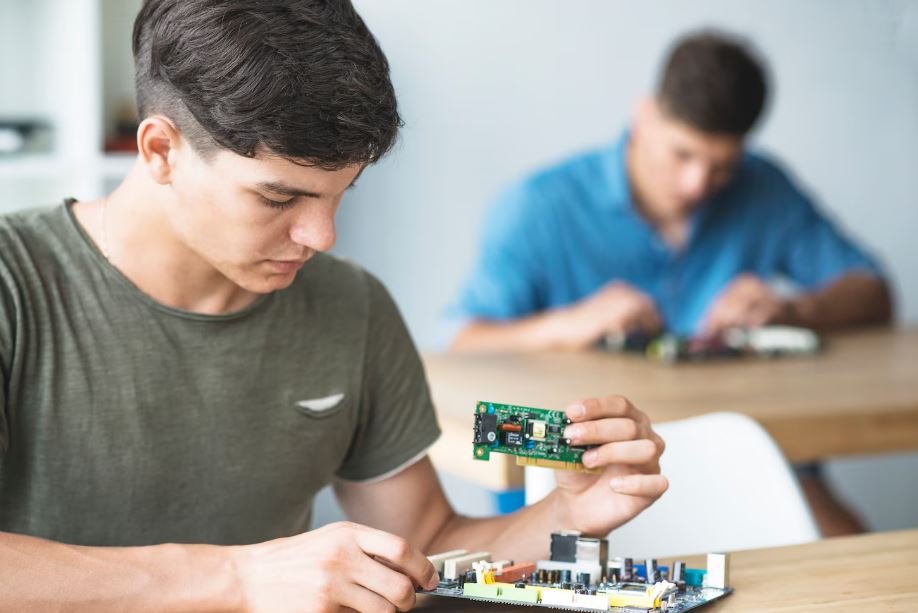
The Micro-PC Wars, CuBox vs. Raspberry Pi in the Battle for the Edge

The CuBox had a different tone when it joined that discussion. Its maker, SolidRun of Tel Aviv, wasn’t trying to win over hobbyists. The CuBox-M was designed for developers who want a clean form factor that looks like a product rather than a prototype, such as those testing edge-based AI inference or Android applications, and who don’t want exposed circuit boards and hanging wires clogging their workstations. The chief systems architect at SolidRun, Jon Nettleton, stated unequivocally that not every IoT software developer wants an SBC spread out on their desk. Although it is a small audience, it is a genuine one.

The CuBox-M isn’t embarrassing itself in terms of specifications. A 1.8GHz ARM Cortex A53 with two or four cores, 4GB of LPDDR4-4000 RAM that can be expanded to 8GB, onboard eMMC storage, a few USB 3.0 ports, gigabit Ethernet, and an HDMI 2.0 output with a 1080p capability. It operates on both Android 10 and Debian Linux, which is really helpful when your work is situated at the intersection of two software domains. Additionally, there is support for Power over Ethernet, which is more important than it may seem when deploying devices in areas with inadequate power infrastructure.

It’s not inexpensive, though. Pre-order prices for the CuBox-M were $99, which is about four times the price of an entry-level Raspberry Pi. SolidRun has always had to address that gap, and they haven’t fully done so. Presumably, the enclosure—that neat little cube—and the design concept behind it are what you’re paying for. Depending on how you use it, it may or may not be worth the premium. Perhaps if a developer wants a piece of hardware that looks like it’s finished on a demo table. Probably not for someone who is building a home lab and only wants it to function.

But hardware isn’t the CuBox’s deeper problem. For more than ten years, the Raspberry Pi community has been growing like a savings account. The Pi’s ecosystem is so dense that moving away from it has a real switching cost, even if the competing hardware is technically superior. This includes accessories, tutorials, forum threads, pre-built software images, and whole product lines from third parties. It seems that SolidRun is aware of this and is purposefully avoiding competition on those terms, focusing on commercial and professional use cases rather than bedroom tinkerers.

The terrain is still changing. Despite having significantly higher computing overhead, mini PCs based on Intel’s N-series chips are now affordable enough to undercut Raspberry Pi clusters in terms of overall cost. One writer reported cutting power consumption by almost half and doing away with a tiny ecosystem of microSD cards, power bricks, and fraying USB cables by switching out four Pi boards with a single low-power mini PC. Even among enthusiasts who built their entire home lab identity around the Pi, it’s difficult to avoid seeing that kind of consolidation gaining traction.

It’s still not entirely clear where the CuBox fits into all of this. It fills a specific gap left by mini PCs and the Pi’s exposed board design: it is enclosed, ARM-based, edge-ready, and dual-OS capable. That niche might be big enough to support a significant product line. It’s also possible that the CuBox’s positioning will be squeezed from both sides as more potent ARM alternatives appear from firms like ArmSoM. Seldom do the micro-PC wars yield clear winners. They simply keep coming up with more intriguing, smaller options.

CuBox vs. Raspberry Pi
Share. Facebook Twitter Pinterest LinkedIn Tumblr WhatsApp Email
Previous ArticleThe Dark Side of the AI Hardware Boom: E-Waste and the ITAD Sector’s Nightmare
Next Article The Day the Encryption Broke: Why Cybersecurity’s ‘Q-Day’ Is Closer Than You Think
Blaze Woodard

    Blaze Woodard, an editor at cubox-i.com, is presently working as an intern at a Silicon Valley technology company while majoring in politics at the University of Kansas. Blaze, who identifies as both a policy thinker and a self-described tech geek, offers a viewpoint on hardware and computing coverage that few editors in this field can match: the capacity to relate the workings of a circuit board to the larger political, regulatory, and social forces influencing the technology sector. Even though her academic path led her to political science, her early fascination with technology persisted. She writes about computing, AI, and hardware with the zeal of someone who truly loves the subject, not as someone assigned to cover it. Blaze plays soccer and spends her free time with friends and living her life, which is exactly what a college student should do outside of the office and newsroom.

    Related Posts

    The ARM Server Revolution Is Coming — and the CuBox-i Ecosystem Is Already Ahead of the Curve

    June 4, 2026

    The CuBox-i Review That Changed How One American Developer Thinks About Embedded Computing

    June 1, 2026

    Why Stanford Researchers Are Using CuBox Clusters to Train Neural Networks

    June 1, 2026

    Why Power Over Ethernet Support on the CuBox-M Is a Bigger Deal Than Anyone Is Giving It Credit For

    May 12, 2026
    Leave A Reply Cancel Reply

    You must be logged in to post a comment.

    Don't Miss
    AI

    Utah Medical Board Suspends State’s AI Doctor Experiment After Misdiagnosis Scare

    By Blaze WoodardJune 5, 20260

    Someone made a choice somewhere in the offices of the Utah Department of Commerce that…

    The ARM Mini Computer That Ships With Full Industrial Certifications and Fits in the Palm of Your Hand

    June 5, 2026

    Tesla’s Dojo vs. The Cloud: A Divergent Strategy in the AI Hardware Race

    June 5, 2026

    The Day the Encryption Broke: Why Cybersecurity’s ‘Q-Day’ Is Closer Than You Think

    June 5, 2026

    The Micro-PC Wars: CuBox vs. Raspberry Pi in the Battle for the Edge

    June 5, 2026

    The Dark Side of the AI Hardware Boom: E-Waste and the ITAD Sector’s Nightmare

    June 5, 2026

    The Data Center Dilemma: As AI Hardware Heats Up, Power Grids Feel the Strain

    June 5, 2026
    About Us
    About Us

    Cubox-i.com is an independent technology publication that focuses on edge AI, industrial hardware, compact ARM computing, and the wider field of technology news that is important to engineers, developers, manufacturers, and knowledgeable readers in the US and abroad.

    Our Picks

    Utah Medical Board Suspends State’s AI Doctor Experiment After Misdiagnosis Scare

    June 5, 2026

    The ARM Mini Computer That Ships With Full Industrial Certifications and Fits in the Palm of Your Hand

    June 5, 2026

    Tesla’s Dojo vs. The Cloud: A Divergent Strategy in the AI Hardware Race

    June 5, 2026
    Dsclaimer

    Cubox-i.com publishes content about markets, finance, investments, and economic issues solely for educational and informational purposes. It’s not financial guidance. Opinion pieces and analysis from independent industry leaders and commentators are regularly published by us; however, these viewpoints are presented as those of the contributors and do not represent cubox-i.com’s recommendations.

    We’re It is highly advised that readers consult a qualified, licensed financial advisor before making any financial decisions based on information found on this website, including purchasing, selling, or holding any investment, asset, or financial product.

    • Homepage
    • Contact Us
    • Privacy Policy
    • Terms of Service
    • Disclaimer
    • About Us
    • Cubox
    • News
    • Technology
    © 2026 ThemeSphere. Designed by ThemeSphere.

    Type above and press Enter to search. Press Esc to cancel.