

For many years, the majority of people connected Dell with the beige tower beneath a professor’s desk or the laptop a cousin purchased because it was on sale at Costco. It’s not precisely the brand that people associate with the “AI revolution.” This perception is disintegrating more quickly than even some seasoned analysts anticipated.
Experienced tech observers were clearly recalibrating after Dell released numbers late last week. Revenue reached almost $44 billion, an 88% increase from the previous year. Orders for AI servers alone totaled $24.4 billion in a single quarter, and the backlog of orders that have been scheduled but not yet shipped has increased from $43 billion to $51.3 billion in just a few months. In pre-market trading, shares increased by about 40%. This kind of action is typically saved for biotech approvals, not for a hardware company that most investors had discreetly filed under “mature, slow, fine.”
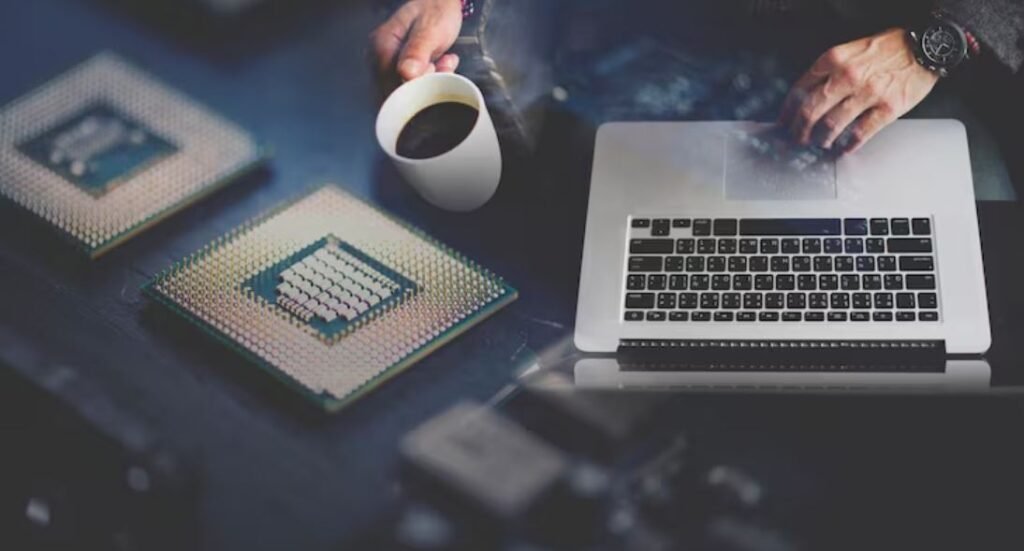
Observing this develop gives the impression that something has actually changed, and it’s not just the stock price. You can see what’s truly changing if you walk into a corporate data center that is currently being modified for AI workloads. The unglamorous plumbing of artificial intelligence: rows of PowerEdge servers, humming cooling fans, flickering blue status lights. The headlines and keynote speeches go to Nvidia, but the chips must find a home. When something goes wrong in Frankfurt, someone has to install them, network them, cool them, and service them at two in the morning. Dell has become the company that does that, almost by accident, thanks to its own decades-old plumbing business.
The AI boom isn’t the only deeper reason this occurred. For more recent, agent-based AI workloads, it’s the quiet exhaustion of the public-cloud model. For many businesses, operating these systems on Amazon or Microsoft’s clouds has become prohibitively expensive; according to Jeff Clarke, COO of Dell, token consumption has increased 320 times over what previous models required. In a CFO meeting, that math doesn’t hold up. It is suddenly less expensive to move the workload back in-house to real servers located in real buildings owned by real businesses. Winners like Dell are produced by this type of unattractive economic reversal.
The customers’ own behavior is peculiar and noteworthy. Several of Dell’s largest purchasers, such as cloud providers and sovereign clients, are entering into multi-year agreements without final pricing being set. five-year agreements. There is no cost guarantee. In business procurement, where buyers typically grind sellers down to the third decimal place, that is practically unheard of. It alludes to an almost real fear of access. To be honest, it’s still unclear if that fear is justified or a sign of more widespread AI panic.
Skeptics also have a point. Hardware margins have always been lower than software margins. Due to valuation concerns, UBS has already lowered its rating, claiming that the rally has outpaced fundamentals. The cycle of AI spending may slow down. Dell’s primary competitor in this market, Supermicro, is hurt but still alive. Dell continues to rely significantly on Nvidia, which is a comfortable situation as long as Nvidia maintains its comfort level.
However, it is difficult to ignore the larger pattern. Old names from the tech bench of the 1990s and 2000s, like Lenovo, Nokia, and even Cisco, are subtly making a comeback. Despite its futuristic branding, some of the companies leading the AI build-out were already established when the majority of today’s software engineers were in school. That has an almost poetic quality. Execution, which hasn’t been tested at this scale yet, will determine whether Dell remains at the center of it or is squeezed by the next architectural shift. As of right now, the market is voting with conviction. Voting for the company that no one anticipated is simply not happening.
