

Just outside of Washington, in a peaceful area of College Park, Maryland, IonQ has accomplished something that the quantum industry has long promised but never quite fulfilled. The company released a complete engineering blueprint for fault-tolerant quantum computing on April 22. In this field, such documents typically come years late or never at all. It includes hardware, control systems, error correction, compiler design, and the choreography of ion movement through traps. The level of detail is astounding. The majority of quantum roadmaps resemble mood boards rather than build orders, not because they are uncommon.
An end-to-end route to 10,000 physical qubits is outlined in the blueprint, which IonQ has dubbed the “Walking Cat Architecture,” with a longer horizon reaching 2 million physical qubits and 80,000 logical qubits. It’s simple to use those figures in press releases. It’s more difficult to explain how to get there without hand-waving over the parts that have traditionally derailed everyone else’s plans, which is what IonQ appears to have accomplished here.
The fact that IonQ has been working on this project in public for some time is helpful. In 2025, the company achieved 99.99% two-qubit gate fidelity, a figure that initially seemed almost suspiciously clean. When the blueprint was released, CEO Niccolo de Masi cited that number and presented the new paper as an extension of the work the hardware team had already demonstrated on the bench. Reading the document gives the impression that the business is no longer making an effort to persuade people that physics works. It is attempting to persuade them that the engineering does.
That distinction is more important than it may seem. For the majority of the last ten years, quantum computing has existed in a peculiar paradox: it is always just a little bit out of reach, but it is taken seriously by serious people. Although roadmaps have been released by IBM, Quantinuum, Riverlane, Google, and IonQ, the specificity has varied greatly. Some read like dreams. Some read like accountants. When investors and clients start asking awkward questions about timelines, the new IonQ paper is closer to the accounting end, which may be the more interesting place to be.
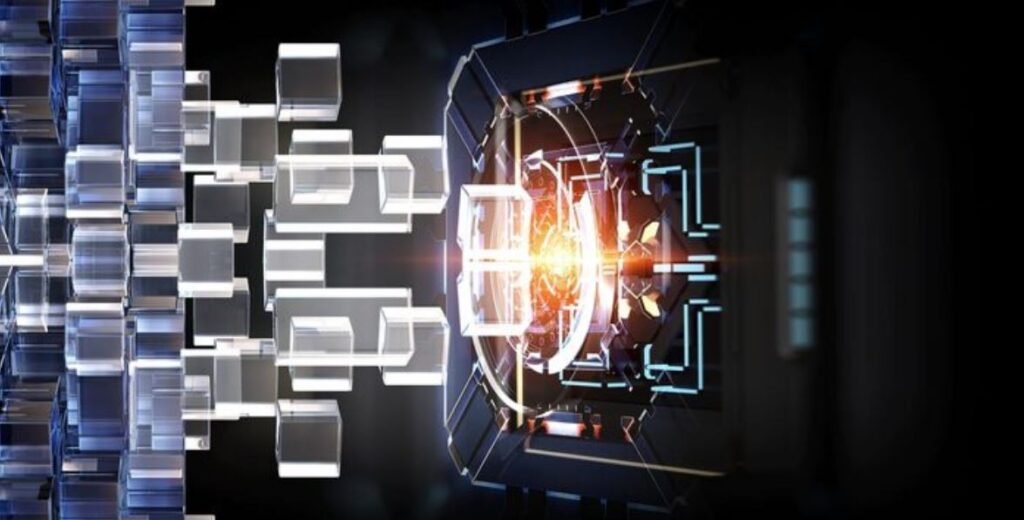
There are good reasons to exercise caution. The transition from a 99.99% fidelity demonstration to a 10,000-qubit production-grade machine is not a straight line, and trapped-ion systems continue to face significant bottlenecks related to modularity and ion transport at scale. In five years, some of the blueprint’s assumptions might seem optimistic. The most intriguing discoveries might also originate from sources other than the trapped-ion camp. Superconducting qubits are dynamic. Atoms that are neutral have had a great run.
Even so, it’s difficult to ignore how IonQ is now positioning itself differently as you watch the announcement land. The company has customers — AWS, AstraZeneca — running real workloads, and a hardware lineage that includes the IonQ Tempo. logistics, financial modeling, drug development, and materials science. Since the use cases have been the same for ten years, they sound familiar, but the tone has changed from “imagine if” to “we’re already running this.” That is a subtle but significant change in direction.
There is a more general trend that should be noted. One of those technologies that the general public has never fully understood how to feel about is quantum. Too theoretical to be clearly helpful, too abstract to be as fascinating as generative AI has been. This kind of buildable, dated, and specific blueprint accomplishes something the field hasn’t quite managed at scale before: it transforms the timeline from a thought experiment into an engineering schedule.
It is another matter entirely whether IonQ fulfills this promise. The news caused the company’s stock to slightly increase, which is about what one might anticipate when a prominent member of the industry releases a reliable technical document on a Tuesday. The upcoming quarters will be the true test. The rest of the quantum field will have to explain why their own roadmaps appear so much more hazy in contrast if the Walking Cat Architecture’s milestones begin to arrive on schedule.
