

A refrigerator the size of a small car hums at temperatures lower than deep space somewhere in an upstate New York laboratory. It contains a fingernail-thin chip that, until recently, sounded like science fiction.
It is resolving a class of issues that the top deep learning models in the world have been silently failing to address for years. Researchers don’t say much as they pass. They’ve mastered the art of not overselling. However, if you spend enough time with them, the atmosphere has changed.
| Field | Detail |
|---|---|
| Topic | Quantum Computing vs. Deep Learning |
| Core Principle | Superposition, entanglement, and qubit-based parallelism |
| Primary Competitor Paradigm | Classical deep learning on GPUs |
| Notable Hardware Players | IBM, Google Quantum AI, IonQ, Rigetti |
| Year Quantum Supremacy Was First Claimed | 2019, by Google’s Sycamore processor |
| Typical Operating Temperature | Near absolute zero (~15 millikelvin) |
| Most Cited Use Cases | Drug discovery, cryptography, optimization, pattern recognition |
| Quantum-Inspired Hardware Today | NVIDIA H100 GPUs, multi-GPU NVLink clusters |
| Estimated Industry Investment (2025) | Over $42 billion globally |
| Status of Quantum Hardware | Experimental, fragile, mostly in research labs |
Deep learning was the only topic of discussion for the better part of ten years. Neural networks were at the center of every conference, funding proposal, and glossy magazine cover. Then, in late 2025, a few papers appeared out of nowhere that demonstrated quantum algorithms outperforming deep learning on particular optimization tasks—not by inches, but by orders of magnitude. Some researchers feel as though something has broken. It’s still unclear if the crack will grow into a true fissure.
The quantum argument is brutal to understand and easy to articulate. Modern AI is powered by GPU clusters, which are examples of classical computers that think in ones and zeros. Qubits don’t. A qubit can hold multiple states simultaneously through superposition, and groups of qubits can behave in ways that classical physics categorically refuses to explain through entanglement. Perhaps this is just a clever physics trick. It might also be a completely different approach to computing. The truth is that no one can pinpoint the exact location, but it is somewhere in the middle.
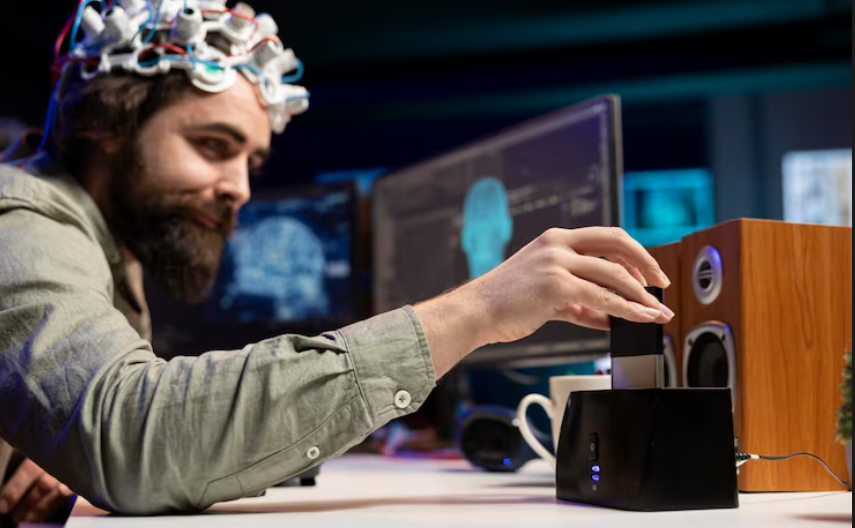
As this develops, it’s difficult to ignore how rapidly the cultural stance has shifted. A year ago, investors gave quantum computing a courteous smile before turning the discussion back to GPUs. These same investors are now quietly questioning whether IBM’s newest processor is more than a press release and about IonQ’s roadmap. Both Tesla and the early deep learning researchers, who spent the 2000s being told their field was a dead end, encountered similar skepticism in their early years. Such patterns often recur.
However, there is still a big disconnect between promise and reality. The quantum devices of today are brittle, prone to noise, and nearly absurdly difficult to run. They reside in helium-cooled, vibration-isolated rooms with multiple layers of shielding. Employees pass the cryostats outside the lab with the same casual indifference that factory workers exhibit when they display completed cars. The devices don’t appear to be revolutionary. They appear obstinate.
For the time being, the real story is quantum-inspired algorithms, which use concepts from quantum mechanics but operate on classical GPUs. They are already outperforming traditional deep learning in areas like pattern recognition, finance, and logistics. A graduate student in Karachi or Lagos can experiment with the same strategies as a hedge fund because companies like RunPod have made the hardware affordable enough to rent by the second. Access like that alters the situation. Usually, it does.
Speaking with people in this field gives me the impression that a lot will change over the next two years. Either the hype subsides and deep learning continues its costly, protracted march, or quantum produces something useful at scale. Investors appear to believe both simultaneously. For the most part, the researchers simply keep working. The refrigerator continues to hum. And it’s possible that a paradigm is already changing somewhere in that hum—quietly, as genuine revolutions typically do.
