

This spring, the claw clip is the first thing you see when you stroll through any college campus. A decade ago, a twenty-year-old would have laughed at plastic that was a little too large. It looks unmistakable when paired with a pair of wired earbuds, a thrifted tank top, and baggy jeans. The children are dressed as though they are in 1998. Many of them would actually live there if they could, according to a recent NBC News Decision Desk Poll conducted by SurveyMonkey.
47% of Americans between the ages of 18 and 29 stated that they would prefer to live in the past if given the choice. A third chose a period of time that was less than half a century ago. Fourteen percent more went back. Just 38% of respondents said they would keep the gift. Though young Black adults were noticeably less excited about turning back time than their white or Hispanic counterparts, the numbers remained consistent across party and gender lines.
It’s easy to write off all of this as the typical generational pouting that every cohort engages in when they’re in their early twenties. However, it appears that something else is happening. According to 62% of Gen Z respondents, they anticipate a worse life than that of earlier generations. The nation is headed in the wrong direction, according to 80% of respondents, the highest percentage of any age group surveyed. It’s not a romantic atmosphere. It’s worn out.
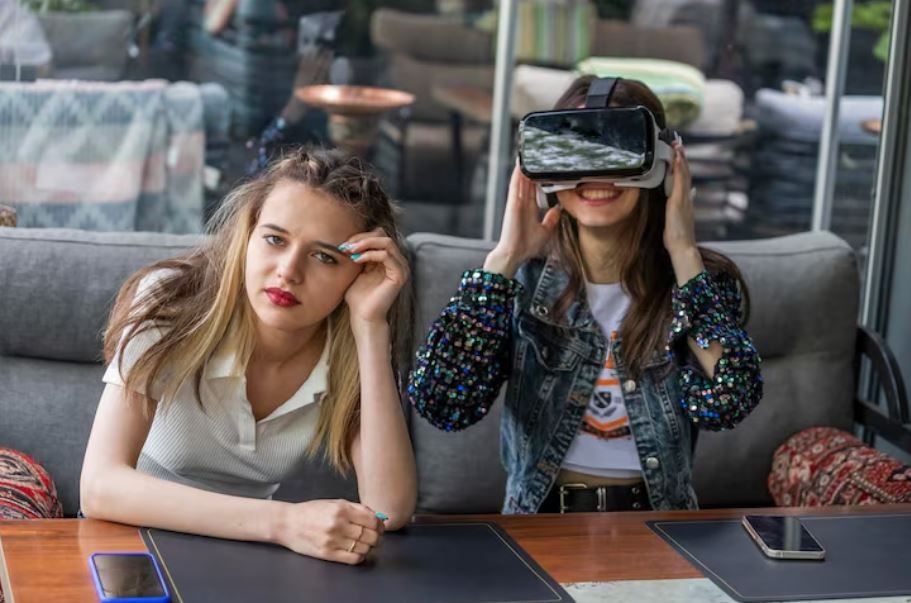
When Gen Zers are asked what they truly mean by “the past,” their responses nearly always fall into the same range: between 1992 and 2005. Twenty-year-old Colorado student Ben Isaacs told NBC that he would choose the 1990s because of its “lack of phones, more personal experience, but also still some of the ease of modern technology.” The final sentence is important. No one wants to give up air conditioning or antibiotics. They wish to stop using the group chat.
Existential psychologist Clay Routledge, who has studied nostalgia for years, describes the impulse as a sort of reboot. He claims that looking back at the 1990s provides a glimpse of a world before everyone was connected to the internet. It’s wishing the smartphone hadn’t prevailed rather than discarding it. The difference is evident everywhere. iPods are once again in high demand. There is a tiny but dedicated secondhand market for cassette tapes. This year, the FX series “Love Story,” which dramatizes John F. Kennedy Jr. and Carolyn Bessette, has unexpectedly become a TikTok obsession.
However, the annoyance goes beyond aesthetics. The same grievances recur whenever you spend time in the comment sections of articles like the one from NBC. It’s all a subscription. All apps are spies. Instead of assisting you in finding something you would truly love, each recommendation is generated by an algorithm designed to keep you scrolling. According to Missouri construction worker Skyler Barnett, there is “so, so much internet nowadays,” and the majority of it is “bullcrap.”
In that, it’s difficult to avoid hearing echoes of earlier grievances, such as what parents used to say about cable television and what grandparents said about radio. But now the scale feels different. A smartphone is not a gadget that is kept in the room’s corner. It’s on the nightstand and in the pocket, taking note of every look. This generation may be the first to realize in real time how much it costs them because they are the first to have never known life without that hum.
It’s unclear if any of this nostalgia will result in a quieter app, a slower purchasing pattern, or a Sunday without a phone. Twenty-five-year-old Michigan student Alex Abernathy told NBC that she’s “about the iPods” and that finding offline communities to be a part of is what excites her about the future. That does not mean that progress is being rejected. It’s an all-at-once request for less of it.
