
Close Menu
Cubox-iCubox-i
  • Homepage
  • Privacy Policy
  • Terms of Service
  • Disclaimer
  • About Us
  • Cubox
  • News
  • Technology
What's Hot

IonQ Just Published Its Full Fault-Tolerant Quantum Computing Roadmap, The Technical Specificity Is Remarkable

June 1, 2026

Why Discomfort With Modern Technology Is Shaping Gen Z’s Desire to Live in the Past

June 1, 2026

The Hidden Cost of ChatGPT: Millions of Gallons of Water Consumed by AI Data Centers

June 1, 2026
Cubox-iCubox-i
Subscribe
  • Homepage
  • Privacy Policy
  • Terms of Service
  • Disclaimer
  • About Us
  • Cubox
  • News
  • Technology
Cubox-iCubox-i
Home»Technology»How Nvidia’s Vera Rubin AI Servers Could Reshape American Data Center Infrastructure by Late 2026
Technology

How Nvidia’s Vera Rubin AI Servers Could Reshape American Data Center Infrastructure by Late 2026

Blaze WoodardBy Blaze WoodardJune 1, 2026No Comments4 Mins Read
Facebook Twitter Pinterest LinkedIn Tumblr WhatsApp VKontakte Email
Share
Facebook Twitter LinkedIn Pinterest Email

A silent change is taking place somewhere between Santa Clara and the dusty outskirts of Phoenix, and most Americans won’t be aware of it until their electricity bills alert them. This fall, Nvidia’s Vera Rubin platform—named for the astronomer who discovered dark matter—will go into full production. The racks themselves, which weigh almost two tons apiece and are assembled from about 1.3 million parts, will begin to arrive at data centers around the nation. It’s the kind of moment that seems important in a way that can only be verified in retrospect.

The way the industry has been discussing Vera Rubin gives the impression that this isn’t just another cycle of upgrades. When the previous generation, Grace Blackwell, shipped in 2024, it was already deemed overwhelming. Nvidia is now claiming ten times the performance per watt, which sounds dubious until you consider that the company has essentially fulfilled its previous promises. At CES in January, Jensen Huang, wearing a leather jacket, told reporters that a single prompt can now initiate “a thousand-step journey.” These machines are designed to handle that kind of workload.

It’s not just the silicon that makes Vera Rubin intriguing in a strictly American setting. It’s the surrounding buildout. Through 2029, Nvidia has pledged to produce up to $500 billion worth of AI infrastructure in the US, including Blackwell GPUs at TSMC’s new Arizona facilities. To ship racks north, Foxconn is building a plant in Mexico. Vera Rubin systems will be housed inside Meta’s data centers by 2027, the company said last week. The list of early clients, which includes OpenAI, Anthropic, Amazon, Google, Microsoft, and CoreWeave, is a veritable who’s who of businesses that have already committed to tens of billions of dollars in capital expenditures just this year.
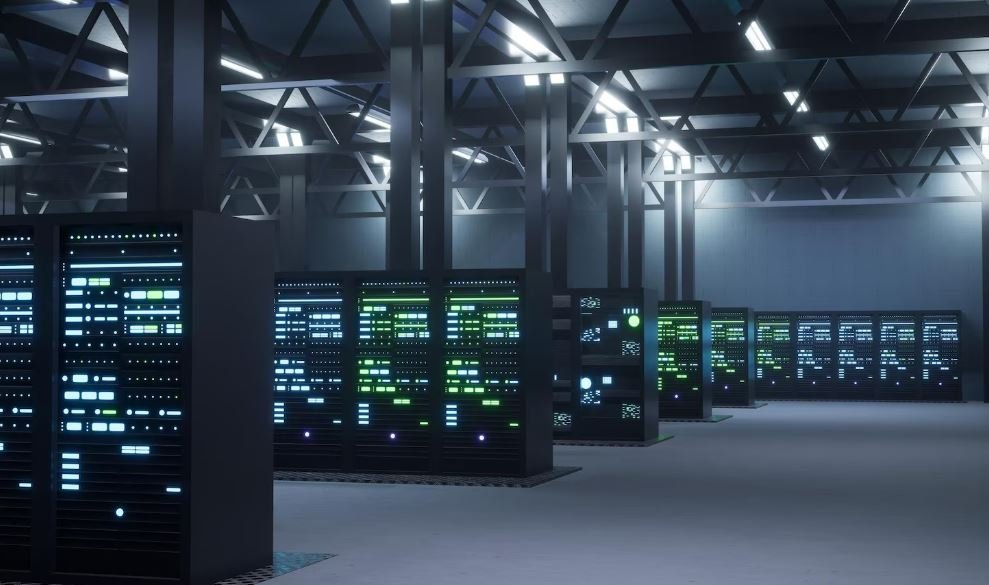
How Nvidia's Vera Rubin AI Servers Could Reshape American Data Center Infrastructure by Late 2026
How Nvidia’s Vera Rubin AI Servers Could Reshape American Data Center Infrastructure by Late 2026

It is worthwhile to consider the physical reality of these systems. The weight of each rack is almost 2,000 kg. In contrast to Blackwell, where superchips were soldered to boards and a single failure could result in a lengthy, costly repair, the compute trays slide out in a matter of seconds. Additionally, Vera Rubin is Nvidia’s first fully liquid-cooled platform, which is more significant than it might seem because conventional evaporative cooling uses water in amounts that have already put a strain on local governments in areas like Northern Virginia and central Texas. This is significantly reduced by liquid cooling, which will be quietly appreciated by county boards and utilities.

Nevertheless, the system will use about twice as much power as its predecessor. The next stage of building data centers in the United States will be defined by this trade-off: more efficient per token, but heavier overall. Operators are already redesigning facilities with denser power feeds and reinforced floors in Loudoun County, Phoenix, Iowa, and the corridors outside of Atlanta. With its server aisles and raised-floor cooling, the older boxy data center might serve as a visual reminder of a transitional period, similar to how mainframe rooms now resemble museum pieces.

Although Nvidia’s price is unknown, Futurum Group projects that each Vera Rubin rack will cost between $3.5 million and $4 million, which is about 25% more than Grace Blackwell. The McKinsey estimate of nearly $7 trillion in global data center investment by 2030 ceases to seem like a wild figure when you multiply that across the hyperscaler order books. It begins to resemble an accounting line.

But beneath it all lies a fragility. Supply chains have been shaken by shortages of memory chips. The competition from Google’s custom silicon, Broadcom, and AMD is more intense than it was a year ago. Furthermore, there is still disagreement over whether the demand for AI justifies the amount of money being invested in it. As this develops, it’s difficult to avoid wondering if late 2026 will be remembered as the time when American infrastructure discreetly reorganized around the roadmap of a single company or as the time when someone, somewhere, finally questioned whether the math holds.

Nvidia's Vera Rubin
Share. Facebook Twitter Pinterest LinkedIn Tumblr WhatsApp Email
Previous ArticleWhy Stanford Researchers Are Using CuBox Clusters to Train Neural Networks
Next Article The AI Hardware Shift Is Creating Winners in Unexpected Places — and Dell Is One of Them
Blaze Woodard

    Blaze Woodard, an editor at cubox-i.com, is presently working as an intern at a Silicon Valley technology company while majoring in politics at the University of Kansas. Blaze, who identifies as both a policy thinker and a self-described tech geek, offers a viewpoint on hardware and computing coverage that few editors in this field can match: the capacity to relate the workings of a circuit board to the larger political, regulatory, and social forces influencing the technology sector. Even though her academic path led her to political science, her early fascination with technology persisted. She writes about computing, AI, and hardware with the zeal of someone who truly loves the subject, not as someone assigned to cover it. Blaze plays soccer and spends her free time with friends and living her life, which is exactly what a college student should do outside of the office and newsroom.

    Related Posts

    IonQ Just Published Its Full Fault-Tolerant Quantum Computing Roadmap, The Technical Specificity Is Remarkable

    June 1, 2026

    Why Discomfort With Modern Technology Is Shaping Gen Z’s Desire to Live in the Past

    June 1, 2026

    The Hidden Cost of ChatGPT: Millions of Gallons of Water Consumed by AI Data Centers

    June 1, 2026

    Google Just Expanded Its Nvidia Partnership to Announce Advanced Cloud Supercomputers for AI Companies

    June 1, 2026
    Leave A Reply Cancel Reply

    You must be logged in to post a comment.

    Don't Miss
    AI

    IonQ Just Published Its Full Fault-Tolerant Quantum Computing Roadmap, The Technical Specificity Is Remarkable

    By Blaze WoodardJune 1, 20260

    Just outside of Washington, in a peaceful area of College Park, Maryland, IonQ has accomplished…

    Why Discomfort With Modern Technology Is Shaping Gen Z’s Desire to Live in the Past

    June 1, 2026

    The Hidden Cost of ChatGPT: Millions of Gallons of Water Consumed by AI Data Centers

    June 1, 2026

    The CuBox-i Review That Changed How One American Developer Thinks About Embedded Computing

    June 1, 2026

    Google Just Expanded Its Nvidia Partnership to Announce Advanced Cloud Supercomputers for AI Companies

    June 1, 2026

    Are AI Companions Changing the Psychological Fabric of Human Relationships?

    June 1, 2026

    Nike Slashes 1,400 Tech Jobs as Retail Heavily Pivots to Automated AI Systems

    June 1, 2026
    About Us
    About Us

    Cubox-i.com is an independent technology publication that focuses on edge AI, industrial hardware, compact ARM computing, and the wider field of technology news that is important to engineers, developers, manufacturers, and knowledgeable readers in the US and abroad.

    Our Picks

    IonQ Just Published Its Full Fault-Tolerant Quantum Computing Roadmap, The Technical Specificity Is Remarkable

    June 1, 2026

    Why Discomfort With Modern Technology Is Shaping Gen Z’s Desire to Live in the Past

    June 1, 2026

    The Hidden Cost of ChatGPT: Millions of Gallons of Water Consumed by AI Data Centers

    June 1, 2026
    Dsclaimer

    Cubox-i.com publishes content about markets, finance, investments, and economic issues solely for educational and informational purposes. It’s not financial guidance. Opinion pieces and analysis from independent industry leaders and commentators are regularly published by us; however, these viewpoints are presented as those of the contributors and do not represent cubox-i.com’s recommendations.

    We’re It is highly advised that readers consult a qualified, licensed financial advisor before making any financial decisions based on information found on this website, including purchasing, selling, or holding any investment, asset, or financial product.

    • Homepage
    • Privacy Policy
    • Terms of Service
    • Disclaimer
    • About Us
    • Cubox
    • News
    • Technology
    © 2026 ThemeSphere. Designed by ThemeSphere.

    Type above and press Enter to search. Press Esc to cancel.