
Close Menu
Cubox-iCubox-i

    Subscribe to Updates

    Get the latest creative news from FooBar about art, design and business.

    What's Hot

    Beyond the Raspberry Pi: Why Developers Are Flocking to the CuBox Ecosystem

    April 27, 2026

    Why Hyperscalers Are Devouring 30% of Global Memory Chip Supply

    April 27, 2026

    The Next Trillion-Dollar Company Won’t Build AI Models—It Will Build the Servers

    April 27, 2026
    Facebook X (Twitter) Instagram
    Cubox-iCubox-i
    Subscribe
    • Homepage
    • Privacy Policy
    • Terms of Service
    • Disclaimer
    • About Us
    • Cubox
    • News
    • Technology
    Cubox-iCubox-i
    • Home
    • Buy Now
    Home»Technology»Why Hyperscalers Are Devouring 30% of Global Memory Chip Supply
    Technology

    Why Hyperscalers Are Devouring 30% of Global Memory Chip Supply

    Blaze WoodardBy Blaze WoodardApril 27, 2026No Comments4 Mins Read
    Facebook Twitter Pinterest LinkedIn Tumblr WhatsApp VKontakte Email
    Share
    Facebook Twitter LinkedIn Pinterest Email

    Like most structural changes in technology, it began quietly. Two years ago, a line item in a hyperscaler’s capital expenditure breakdown was hardly worth looking at, but now it looks more like a siege than a budget. The unglamorous workhorses of computing, memory chips, are devouring the cloud industry. According to semi-analysis data, memory will account for roughly 30% of all hyperscaler capital expenditures in 2026, up from roughly 8% in 2023 and 2024. That is a nearly four-fold increase in just four years, and it continues to rise.

    You can practically feel it if you stroll through any significant server hall that is being built this year. Tucked behind every Nvidia or AMD chip is a tower of stacked memory that often costs more than the silicon performing the calculations, but the racks of accelerators and the GPUs receive the media attention.

    InformationDetails
    TopicHyperscaler consumption of global memory chip supply
    Year of ReferenceCalendar Year 2026
    Memory Share of Hyperscaler Capex (CY23–CY24)Roughly 8%
    Projected Memory Share (CY26)Approximately 30%
    Projected Trend (CY27)Higher still, with continued ASP growth
    Total Incremental Hyperscaler Spend (CY26)Around $250 billion
    Key Memory Categories AffectedDRAM, HBM, LPDDR5, NAND flash, DDR4
    LPDDR5 Open-Market Price (Q1 2026 est.)Likely above $10 per GB
    DDR5 64GB RDIMM Price (End of 2026)Up to twice the early-2025 level
    Samsung Memory Price Increase Since Sept 2025Up to 60%
    Major Memory SuppliersSamsung, SK Hynix, Micron
    Major Hyperscaler BuyersMicrosoft, Google, ByteDance, Alibaba
    Expected Supply Normalization2027–2028
    Smartphone Shipment Outlook (2026)Expected to decline

    Through 2027, there will still be a shortage of HBM, the vertically stacked memory attached to AI accelerators. This year, DRAM prices are predicted to more than double, and next year, a double-digit increase in ASP is anticipated. Since the beginning of 2025, LPDDR5 contract prices have already tripled. Speaking with industry insiders, it seems that no one anticipated the curve would bend so sharply and quickly.

    Only a portion of the story is revealed by the numbers. Hard-disk drive rationing has started in Japanese electronics stores. Shenzhen smartphone executives are quietly getting ready for what one Counterpoint analyst predicts will be a 20–30% increase in entry-level phone bill-of-materials costs. Realme and Xiaomi have alluded to price increases.
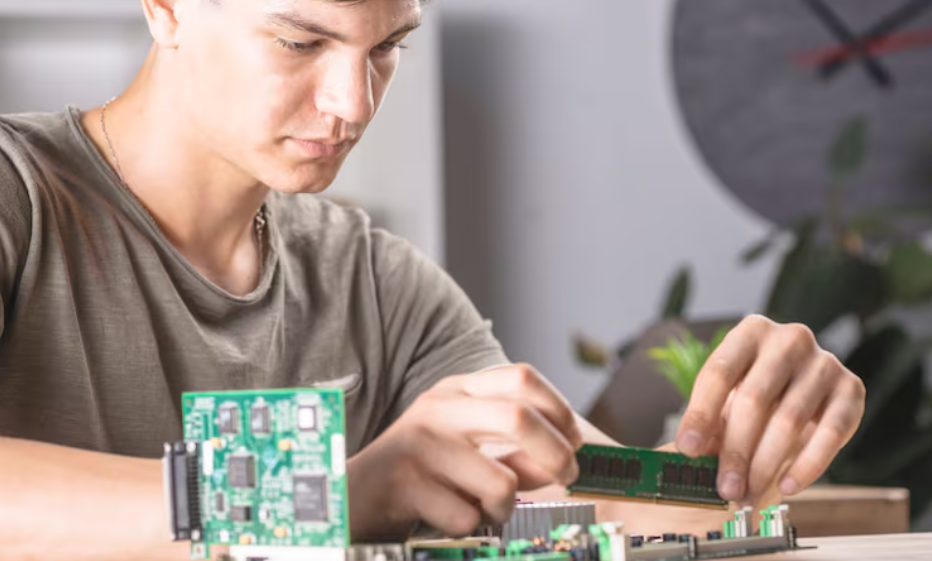
    Hyperscalers Are Devouring 30%
    Hyperscalers Are Devouring 30%

    Since September 2025, Samsung has already increased the price of some memory products by up to 60%. It’s difficult to ignore the fact that the consumer end of the chain bears the brunt of the injuries.

    All of this has an intriguing little twist. SemiAnalysis claims that Nvidia receives “VVP” (Very Very Preferred) pricing on DRAM, which is significantly less than what hyperscalers and the general market pay. That treatment is not applied to AMD. Additionally, it ships at lower volumes and has more memory per accelerator, making it structurally more vulnerable to price fluctuations. Scale is more than just a benefit in a market this competitive. It’s practically its own currency.

    Meanwhile, economists are beginning to worry about the big picture. Greyhound Research’s Sanchit Vir Gogia described the state of affairs as a “graduation,” moving from a component-level issue to a macroeconomic risk. Analysts don’t use that phrase lightly. The parent chairman of SK Hynix stated in Seoul last month that he is concerned about completely turning away customers due to the volume of supply requests he is handling.

    The Stargate project alone, which OpenAI signed with Samsung and SK Hynix in October, would eventually require nearly twice as much monthly HBM production worldwide. This type of math requires you to read the line twice.

    By October, DRAM suppliers’ inventories had dropped from 13 to 17 weeks in late 2024 to just two to four weeks. It takes years to build new factories, and manufacturers are concerned about overbuilding as they did in previous cycles. Everyone waits as a result. With their solid balance sheets and long-term contracts, the hyperscalers will weather this storm. White-box manufacturers and smaller OEMs might not. As this develops, it’s easy to believe that a GPU isn’t the bottleneck in AI’s future at all. It’s the quiet little chip that no one used to discuss.

    Hyperscalers Are Devouring 30%
    Share. Facebook Twitter Pinterest LinkedIn Tumblr WhatsApp Email
    Previous ArticleThe Next Trillion-Dollar Company Won’t Build AI Models—It Will Build the Servers
    Next Article Beyond the Raspberry Pi: Why Developers Are Flocking to the CuBox Ecosystem
    Blaze Woodard

      Blaze Woodard, an editor at cubox-i.com, is presently working as an intern at a Silicon Valley technology company while majoring in politics at the University of Kansas. Blaze, who identifies as both a policy thinker and a self-described tech geek, offers a viewpoint on hardware and computing coverage that few editors in this field can match: the capacity to relate the workings of a circuit board to the larger political, regulatory, and social forces influencing the technology sector. Even though her academic path led her to political science, her early fascination with technology persisted. She writes about computing, AI, and hardware with the zeal of someone who truly loves the subject, not as someone assigned to cover it. Blaze plays soccer and spends her free time with friends and living her life, which is exactly what a college student should do outside of the office and newsroom.

      Related Posts

      The Environmental Cost of America’s AI Server Boom—And How to Fix It

      April 27, 2026

      Argonne National Laboratory Just Expanded America’s AI Infrastructure With New Supercomputers and Public-Private Partnerships

      April 27, 2026

      Wall Street Job Cuts Spike as Generative AI Takes Over Financial Modeling

      April 27, 2026

      Android TV Stick Showdown: Why the Tiny Box on Your TV Just Got a Lot More Complicated

      April 27, 2026
      Leave A Reply Cancel Reply

      You must be logged in to post a comment.

      Don't Miss
      Cubox

      Beyond the Raspberry Pi: Why Developers Are Flocking to the CuBox Ecosystem

      By Blaze WoodardApril 27, 20260

      These days, you encounter a certain type of developer at audio meetups and home-lab forums:…

      Why Hyperscalers Are Devouring 30% of Global Memory Chip Supply

      April 27, 2026

      The Next Trillion-Dollar Company Won’t Build AI Models—It Will Build the Servers

      April 27, 2026

      Why the U.S. Defense and Industrial Sector Is Looking Hard at Compact ARM Computers Like the CuBox-i

      April 27, 2026

      The Environmental Cost of America’s AI Server Boom—And How to Fix It

      April 27, 2026

      Argonne National Laboratory Just Expanded America’s AI Infrastructure With New Supercomputers and Public-Private Partnerships

      April 27, 2026

      Why the CuBox-i Is the Answer to the Question Every Industrial Developer Is Asking About Edge Hardware

      April 27, 2026
      About Us
      About Us

      Cubox-i.com is an independent technology publication that focuses on edge AI, industrial hardware, compact ARM computing, and the wider field of technology news that is important to engineers, developers, manufacturers, and knowledgeable readers in the US and abroad.

      Our Picks

      Beyond the Raspberry Pi: Why Developers Are Flocking to the CuBox Ecosystem

      April 27, 2026

      Why Hyperscalers Are Devouring 30% of Global Memory Chip Supply

      April 27, 2026

      The Next Trillion-Dollar Company Won’t Build AI Models—It Will Build the Servers

      April 27, 2026
      Dsclaimer

      Cubox-i.com publishes content about markets, finance, investments, and economic issues solely for educational and informational purposes. It’s not financial guidance. Opinion pieces and analysis from independent industry leaders and commentators are regularly published by us; however, these viewpoints are presented as those of the contributors and do not represent cubox-i.com’s recommendations.

      We’re It is highly advised that readers consult a qualified, licensed financial advisor before making any financial decisions based on information found on this website, including purchasing, selling, or holding any investment, asset, or financial product.

      • Homepage
      • Privacy Policy
      • Terms of Service
      • Disclaimer
      • About Us
      • Cubox
      • News
      • Technology
      © 2026 ThemeSphere. Designed by ThemeSphere.

      Type above and press Enter to search. Press Esc to cancel.